Live Chat
Assistant
Offline
Loading your assistant...
Channel: WhatsApp0/400

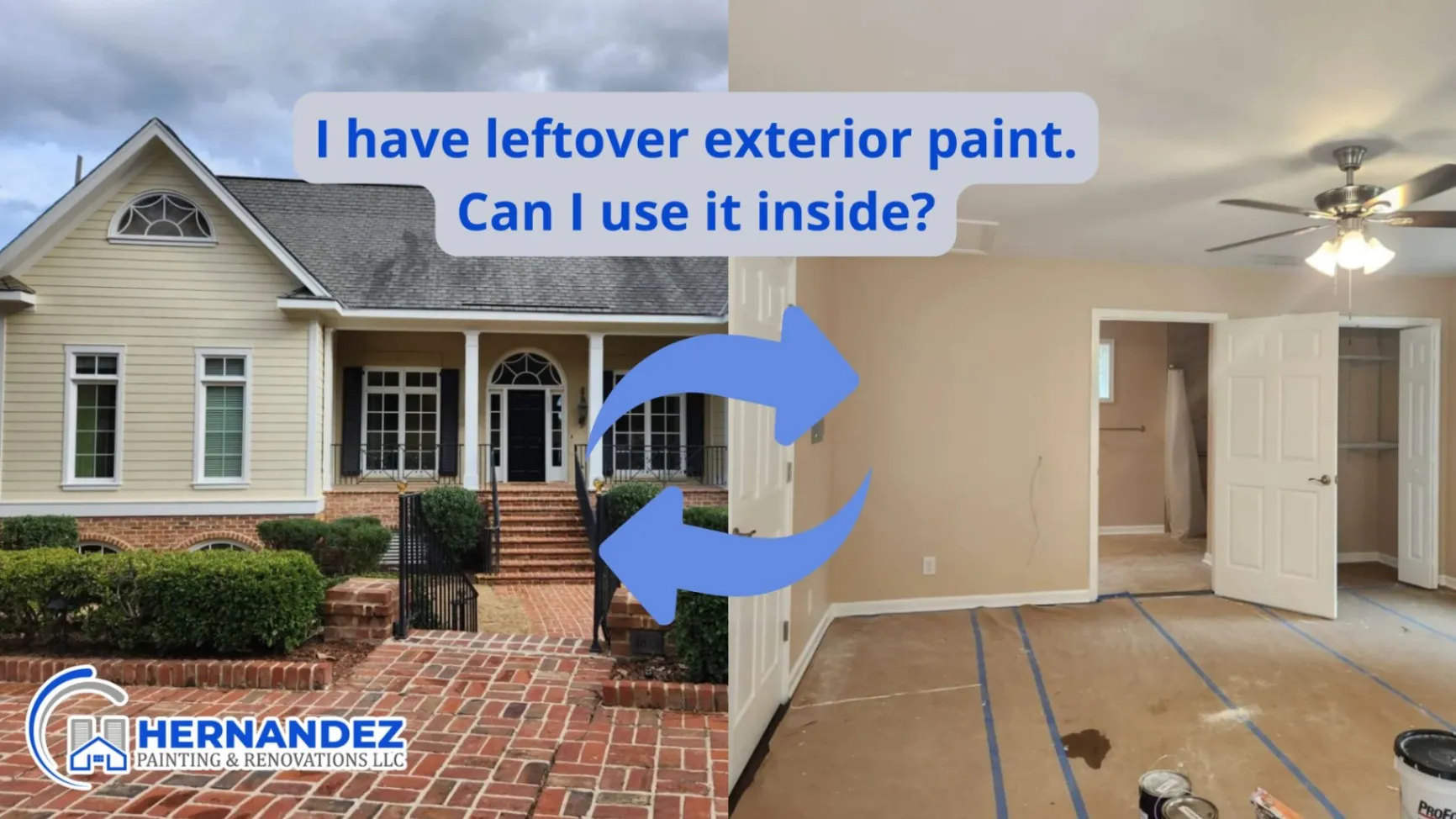
I’ve been on more job sites than I can count where I walk into a living room and immediately hit a wall of that sharp, chemical "new paint" smell—even though the walls were painted two weeks ago. Usually, it’s the same story: a homeowner found three gallons of exterior satin in the garage and figured, "Paint is paint, right? If it can survive a South Carolina thunderstorm, it can handle my hallway."
Well, I hate to be the bearer of bad news, but as someone who has spent 25 years watching paint dry (literally), I can tell you that using exterior paint inside is one of those shortcuts that almost always ends up costing you more in the long run. Let’s talk about why your house—and your health—will thank you for keeping that exterior can outside where it belongs.
The biggest difference between interior and exterior paint isn't the color; it's the "binder" or the resin. Think of the resin as the glue that holds the pigment to your wall.
Outside, your house is a living thing. When the sun beats down on your siding in the middle of a July afternoon, that wood or hardy plank expands. At night, when it cools down, it shrinks. Exterior paint is specifically engineered to stay flexible. It’s designed to stretch and move so it doesn't crack under the sun.
Pro Tip: Because exterior paint is designed to stay soft and flexible, it never truly "cures" to a hard finish. If you put that on your bedroom walls, you’ll notice that if you press your thumb against it, or if a piece of furniture leans against the wall, the paint stays slightly tacky. In the pro world, we call this "blocking." It means that even months later, things will stick to your walls, and if you try to wipe away a smudge with a damp cloth, the paint might actually peel off like rubber. Interior paint, on the other hand, is designed to dry hard so it can take the "bumps and bruises" of indoor life.
This is the part I really want you to pay attention to, because it’s about your family's safety. Every can of paint contains VOCs (Volatile Organic Compounds). These are the chemicals that turn into gas as the paint dries.
Interior paints are strictly regulated. These days, most quality interior paints are "Low-VOC" or even "Zero-VOC," meaning you can paint a nursery and sleep in the house that same night without a headache. Exterior paints are a different beast. Because they are meant for the open air, manufacturers use much stronger chemicals to help the paint survive UV rays and temperature swings.
The Fact: When you use exterior paint inside, those heavy-duty chemicals have nowhere to go. They get trapped in your drywall, your carpets, and your curtains. I’ve seen cases where the "off-gassing" from exterior paint lasted for months, causing headaches, dizziness, and a lingering chemical odor that just wouldn't quit. Outside, the wind carries those fumes away. Inside, you’re breathing them in while you sleep. It’s simply not worth the risk.
Living in the Columbia and Lexington area, we all know about mold and mildew. It’s a constant battle with our humidity. To combat this, exterior paint is packed with fungicides and mildewcides.
Pro Tip: These additives are designed to "leach" to the surface of the paint slowly over the years to keep the outside of your house looking clean. That’s fine for your siding, but do you really want fungicides leaching into your bathroom or kitchen? If you use exterior paint in a poorly ventilated bathroom, you aren't just stopping mold; you’re living in a small box filled with pesticide-grade chemicals. If you’re worried about mold in your bathroom, ask for an interior paint with a KBS (Kilz-type) antimicrobial finish. It’s designed to be safe for indoor air while still keeping the walls clean.
Let’s talk about real life. If you have kids or pets, your walls are going to get dirty. Interior paint is designed with "scrubbability" in mind. You can take a sponge and some mild soap to a high-quality interior eggshell finish, and the scuff mark will come right off.
Because exterior paint remains soft (to allow for that "flex" we talked about), it doesn't handle scrubbing well. If you try to clean a scuff mark off exterior paint that’s been applied indoors, the friction and moisture will often cause the paint to "burnish" (turn shiny) or, worse, start to roll off the wall in little clumps. You’ll end up with a wall that looks splotchy and uneven, and your only fix will be to prime the whole room and start over with the right paint.
"But what about my screened-in porch?" This is a "gray area." If the porch is fully open to the air, exterior paint is the way to go. However, if it’s an enclosed sunroom with glass windows that stay shut most of the year, I’d treat it like an interior room. If the air doesn't circulate freely, you’ll run into the same fume issues we discussed.
"Can I use exterior paint on my front door... but on the inside part?" Usually, for a front door, we use a high-quality exterior enamel on both sides. Since it's just one door and it’s frequently opened, the fume risk is minimal. Plus, the inside of your door takes a lot of abuse from keys and bags, so that tough exterior enamel can actually be a benefit there.
"I already painted a room with exterior paint. What do I do now?" Don't panic, but you do need to fix it. The best way to "seal" in those fumes and create a hard surface is to use a high-quality odor-blocking primer. You’ll want to apply a coat of primer over the exterior paint, let it dry completely (with the windows open!), and then finish it with two coats of proper interior latex paint.
I know it’s tempting to save $50 by using up that leftover paint in the garage. But when you factor in the health risks of the fumes, the sticky texture that attracts dust, and the fact that you can’t properly clean it, the "free" paint becomes very expensive.
If you want your home to look professional and stay healthy, use the tools designed for the job. Keep the exterior paint for your sheds, fences, and siding. For your living room, your kitchen, and your bedrooms, go with a quality interior paint. Your lungs—and your walls—will thank you.
Still unsure which paint is right for your specific project? Sometimes a quick look at the label isn't enough. Feel free to reach out; I’ve seen every imaginable paint reaction, and I’m always happy to help a neighbor avoid a "sticky" situation.
Hernandez Painting & Renovation LLC has proudly served our community for over a decade, earning a reputation for quality workmanship and trustworthy service. Our team of professionals brings years of hands-on experience, combining traditional techniques with the latest innovations in painting and home renovation.
Columbia, SC
803-667-8462
[email protected]
info@hernandezpainting
andrenovationsllc.com
Monday – Saturday8:00 AM - 6:00 PM

Live Chat
Assistant
Offline