How Humidity and SC Heat Affect Your Exterior Paint (And How to Fix It)
Living in Columbia, South Carolina, means enjoying warm weather, vibrant summers, and beautiful sunny days. However, the relentless climate of the Midlands—marked by sweltering summer heat, intense ultraviolet (UV) radiation, and heavy humidity—takes a serious toll on home exteriors.
If you have noticed blistering, chalking, or cracking along your siding, you are not alone. Understanding how local weather affects your home’s outer shell is the first step toward protecting your investment.
1. The Science of Sun & Humidity Damage
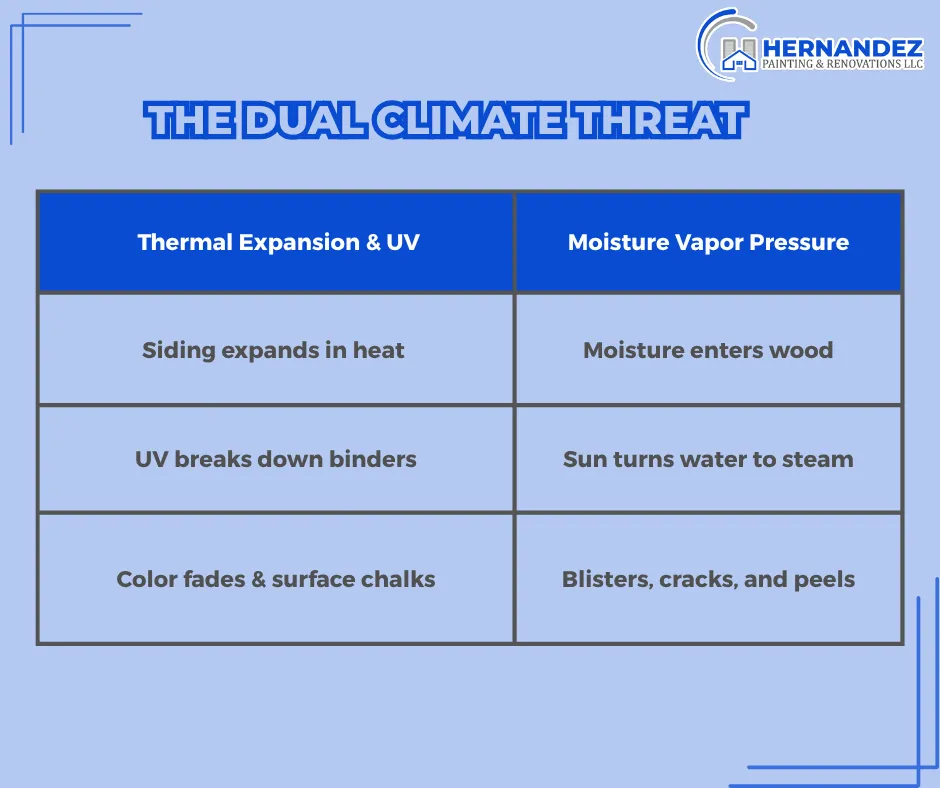
Columbia homes face a unique dual threat every summer: solar heat and ambient moisture.
Thermal Expansion & UV Radiation
During peak summer months, direct sunlight can heat siding surfaces to temperatures exceeding 150°F. This extreme thermal energy causes building materials like wood, fiber cement, and vinyl to expand. At night, as temperatures drop, the materials contract.
This constant cycle stretches paint films to their limit. At the same time, intense UV rays break down the resin binders in low-quality paint, causing the finish to fade and turn into a powdery residue known as chalking.
Moisture Vapor Pressure
When relative humidity reaches extreme levels, microscopic moisture accumulates within porous siding materials such as pine, cedar, or masonry. When the hot morning sun strikes damp siding, trapped moisture evaporates rapidly outward.
If the paint layer lacks elasticity and breathability, this rising vapor pressure physically lifts the coating off the substrate, creating fluid- or air-filled blisters that eventually burst and peel.
2. The Dangers of Painting Exterior Surfaces in High Humidity
Painting exterior surfaces in high humidity without monitoring weather conditions is the main reason many paint jobs in Richland and Lexington counties fail early.
- Delayed Drying: High atmospheric humidity slows down the evaporation rate of water in latex and acrylic paints, preventing the film from curing properly.
- Dew Point Moisture: If surface temperatures drop near the local dew point during application or curing, condensation settles on the fresh coat, compromising adhesion.
- Surfactant Leaching: When humidity delays drying, water-soluble ingredients (such as surfactants) rise to the surface, leaving sticky tan or white streaks across your siding.
Pro Tip: Professional painters avoid applying exterior coatings when relative humidity exceeds 85% or when rain is expected within 24 hours.
3. How to Stop Exterior Paint Peeling: The Prep Standard
Learning how to stop exterior paint peeling permanently comes down to thorough surface preparation and moisture management. Simply slapping a new coat over damaged paint will only yield short-term results.
- Soft Washing: Pressure washing alone can force water deep into wood grain. A soft wash treatment using specialized mildewcides destroys mold spores and safely removes surface contaminants.
- Moisture Content Testing: Wood siding must be thoroughly dry before coating. Professional contractors use moisture meters to confirm that wood moisture content falls below 12% before priming.
- Scraping & Feathering: Failing paint must be scraped back to a solid base. Sanding the surrounding edges (feathering) ensures seamless transition lines that water cannot catch on.
- Breathable Priming: Applying high-adhesion, alkali-resistant primers—like Sherwin-Williams Extreme Bond or Benjamin Moore Fresh Start—locks down bare wood while allowing internal moisture vapor to escape without lifting the topcoat.
4. What Is the Best Exterior Paint for South Carolina Weather?
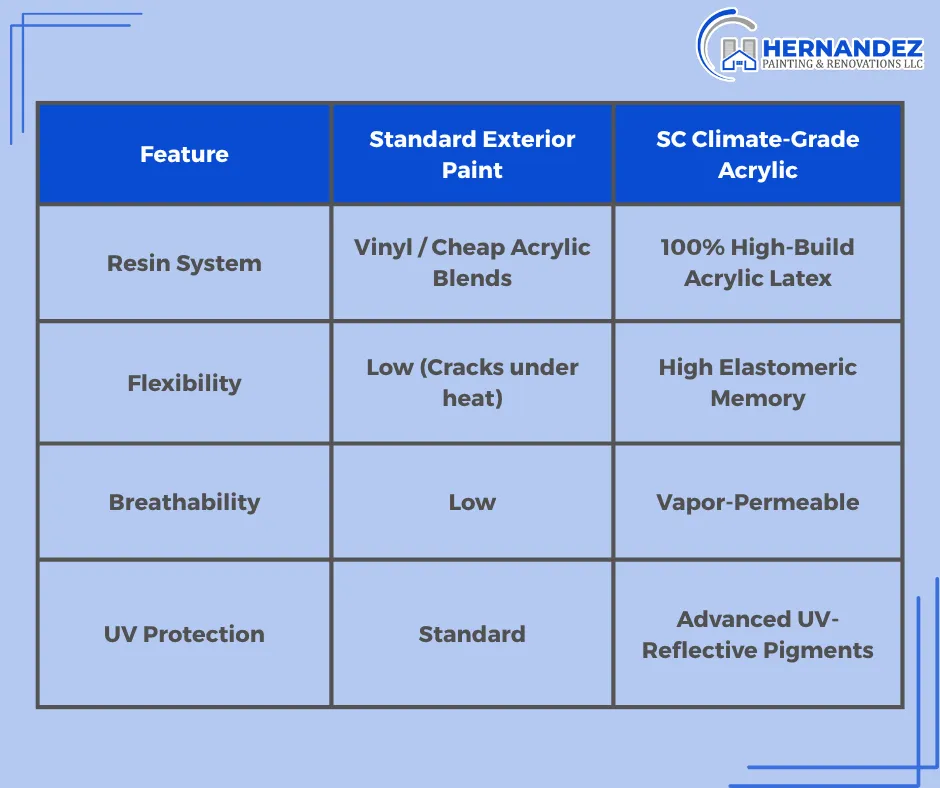
Choosing the best exterior paint for South Carolina weather requires selecting products engineered for extreme flexibility, high moisture tolerance, and UV protection. Standard vinyl or low-tier contractor-grade paints simply break down under the SC climate.
Top Recommended Paint Lines & Brand Specs
1. Sherwin-Williams (Industry Standard for SC Homes)
- Emerald® Exterior Acrylic Latex: The gold standard for dark-colored homes or high-sun exposures. It forms a hard, tight film that resists extreme UV fading, dirt pickup, and mildew.
- Duration® Exterior Coating: Formulated with PermaLast® acrylic co-polymer technology. Its thicker application layer creates an ultra-flexible barrier that expands and contracts without cracking or peeling under heat spikes.
- Resilience® Exterior Paint: Built specifically for high-humidity and rain-prone zones. Features MoistureGuard™ technology, allowing it to develop rain and dew resistance twice as fast as standard acrylics (curing safely even when evening dew rolls in early).
2. Benjamin Moore (Premium Protection & Color Lock)
- Element Guard® Exterior Paint: Engineered specifically for wet, humid, and tropical climates. It resists wind-driven rain, excessive humidity, and early moisture damage, with rain resistance kicking in as fast as 60 minutes after application.
- Aura® Exterior Paint: Combines 100% acrylic resins with proprietary Color Lock® technology. It provides unrivaled resistance to harsh southern UV fading, preventing chalking even on dark exterior hues.
Protect Your Home with Hernandez Painting & Renovation LLC
Defending your Columbia home against heat and humidity demands precise timing, proper surface prep, and premium materials tailored to the South Carolina Midlands.
At Hernandez Painting & Renovation LLC, we specialize in high-durability exterior painting, siding restoration, and home repairs using top-tier coatings from Sherwin-Williams and Benjamin Moore.
- Local Service Areas: Lexington, SC, Forest Acres, SC, Garners Ferry, SC, Gilbert, SC, West Columbia, SC